December 26: twice as many toys, nowhere to put them — and one bag. The playroom floor is covered in boxes, ribbon and toys that were exciting at 8 a.m. and are already under the sofa by noon. The old toys are still there too, because nobody wants to be the mom who throws away a favourite on the day after Christmas. This after-Christmas toy clutter reset takes fifteen minutes and one bag — not a full declutter, not a fight, just enough space to breathe again.
Packaging out first, before you touch a toy
Do not start by sorting toys. Start with the packaging. Boxes, plastic, twist ties, instruction booklets nobody will read — all of it goes straight into a trash bag, and the bag goes out. Then gather the ribbon, the wrapping paper and the gift bags worth keeping into one bag by the door. Five minutes of packaging is the fastest win in the house, and once the floor is visible again, the toy problem looks half its size.
Three bins, no debating
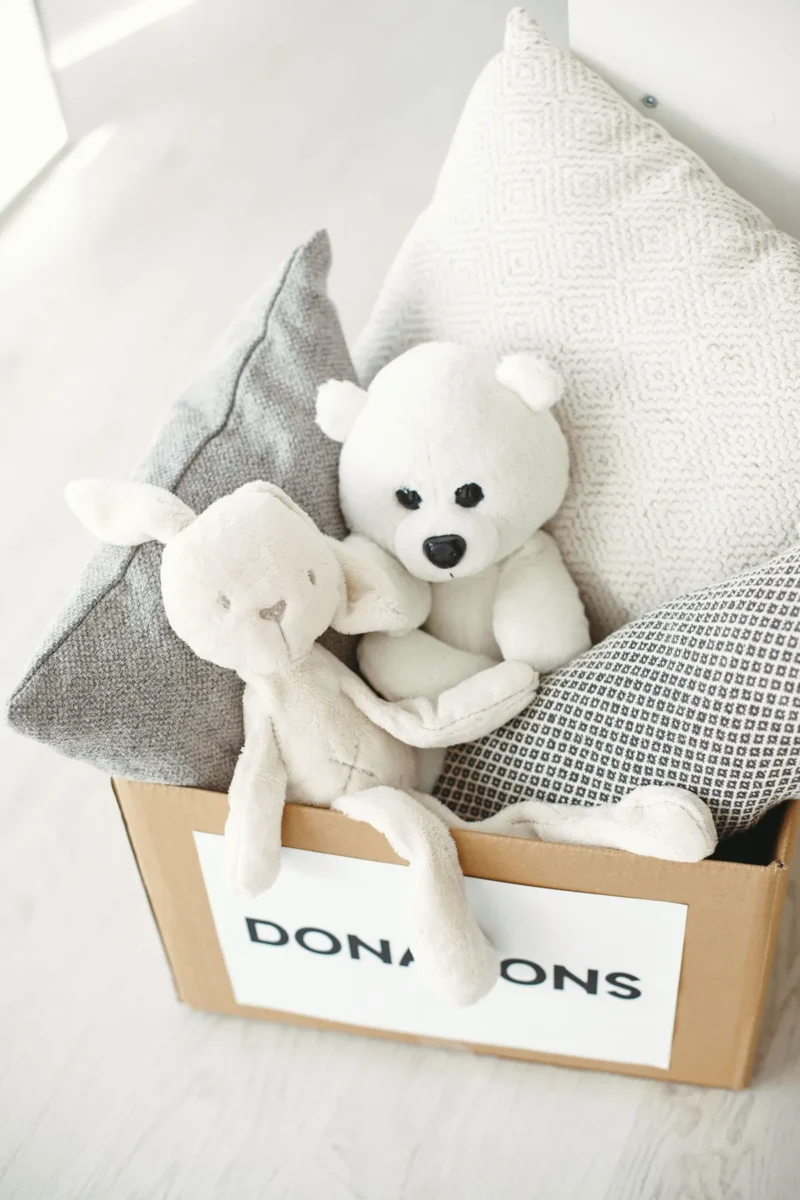
Get three bins or bags and label them in your head: keep, donate, trash. Broken toys and toys with missing pieces go in trash — no fixing, no “maybe later.” Toys your kids have outgrown go in donate. Everything else stays. Work fast and do not debate a single toy for more than ten seconds; if you hesitate, it goes in keep and you move on. The goal is not a perfect playroom. The goal is one bag of donate and one bag of trash out of the room.
Let the kids choose, then stop asking
Ask each child to pick one old toy to give away for every new toy they got — just one, their choice, no arguing. Kids give away toys far more easily when they choose, and far less easily when you choose for them. Once they have picked, thank them and stop asking. Do not go back through the donate bag in front of them, and do not ask about a second toy. One choice each is enough, and it teaches the habit without turning Christmas into a lecture.
Rotation beats storage every time
You do not need more shelves — you need fewer toys out at once. Pick the toys your kids actually played with this week and leave those out. Put the rest in a box on a closet shelf, and swap a few in next week when the new ones get boring. A toy that comes back from the closet feels new again, and a playroom with ten toys gets played with more than a playroom with fifty. Rotation is the whole trick, and it costs nothing.
Give every toy a home, in fifteen minutes
Now put the keepers away, one bin at a time. Blocks in one bin, dolls in one bin, cars in one bin, art supplies in one bin — labels optional, lids on. If a toy has no bin, it lives on the shelf by the door, not on the floor. Do not buy new storage today, and do not reorganise the whole closet. Fifteen minutes of putting things in bins is enough, because the bins are the system now — when the bins are full, something has to go before something new comes in.
Donations out the same day
A donate bag that sits by the door for a week is just clutter in a new place, and kids will fish their old toys back out of it. Put the bag in the car now, and drop it off the next time you drive past the donation bin — today if you can. Then take a photo of the playroom floor, clear for the first time since Christmas morning, and let yourself enjoy it. The new toys have room now, the old ones have a new home, and you did it in fifteen minutes with one bag.
Checklist
- ☐ Packaging out — boxes, plastic and ribbon in the trash
- ☐ Three bins sorted: keep, donate, trash
- ☐ One old toy chosen by each child to give away
- ☐ Toys rotated — ten out, the rest in the closet
- ☐ Keepers in bins, lids on, floor clear
- ☐ Donate bag in the car, out the same day
- ☐ Timer stopped at fifteen minutes — done
Fifteen minutes, one bag. Start with the packaging, let the kids choose one toy, and take the donate bag out today.